
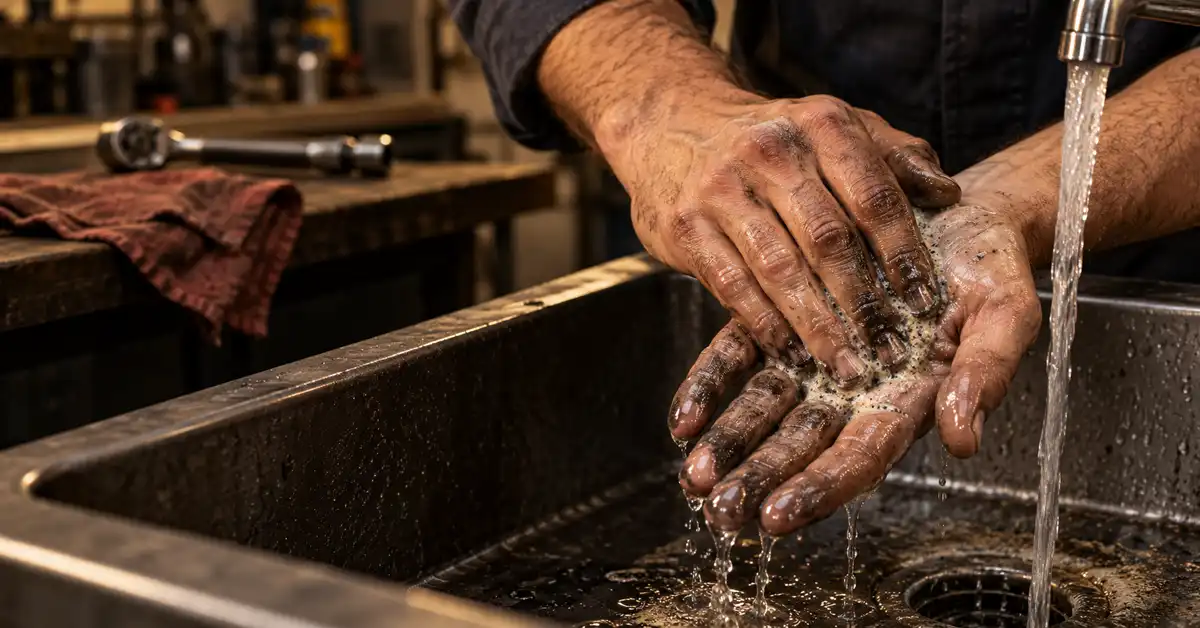
Grease has a way of settling into fingerprints, around fingernails and across the creases of your hands. Regular hand soap may remove light dirt, but heavier automotive, workshop and equipment grease often requires a more focused cleaning method.
The good news is that you do not need to reach for gasoline, brake cleaner, mineral spirits or other products that were not designed for washing skin. With water, the right hand cleaner and a thorough washing technique, you can loosen stubborn grime and rinse it away.
Grease is formulated to cling to surfaces and resist water. That makes it useful for lubricating tools, bearings, machinery and vehicle components, but it also makes it difficult to remove from skin.
Water alone usually rolls over oily residue instead of lifting it. Standard hand soap may remove some surface grease, but it can struggle with grime trapped in fingerprints, calluses and the areas around your nails.
A heavy-duty hand cleaner addresses this problem by combining cleansing ingredients with physical scrubbing action. In a pumice hand cleaner, fine pumice particles help loosen stubborn material while the cleanser helps carry the residue away during rinsing.
Products such as gasoline, paint thinner, mineral spirits, parts cleaner and brake cleaner are made for fuel systems, painted surfaces, tools or mechanical components. They are not substitutes for cosmetic hand-cleaning products.
Depending on the product and the exposure, solvents can remove natural oils from the skin or cause irritation. Some may also present inhalation, flammability or other hazards. Always follow the product label and Safety Data Sheet when handling workplace chemicals.
If your hands are exposed to a hazardous chemical rather than ordinary grease or grime, follow the chemical manufacturer’s first-aid directions and your workplace safety procedures. A cosmetic hand cleaner should not replace the required response to a hazardous exposure.
Before washing, wipe away loose or heavy grease with a disposable shop towel or clean rag. Removing the excess first gives the hand cleaner less material to work through.
Avoid spreading the grease onto clean surfaces, clothing, door handles or faucets. Dispose of contaminated towels according to the requirements for the material you were handling.
Lightly wet your hands with water. GRIT-IT! is water-activated, so damp hands help begin the cleaning process.
Your hands should be damp rather than dripping. Too much water at the beginning can dilute the cleaner before you have worked it into the greasy areas.
Apply GRIT-IT! to your damp hands. Rub your palms together, then work the cleaner across the backs of your hands, between your fingers and around your fingertips.
Natural pumice provides scrubbing action that helps loosen grease and grime from the textured surface of your skin.
Continue rubbing until you have worked the cleaner across every dirty area. Pay special attention to fingerprints, knuckles, calluses, the sides of your fingers and the areas around your nails.
For grime around the nails, a dedicated nail brush can help reach areas that are difficult to clean with hand rubbing alone. Use controlled pressure rather than aggressive scrubbing.
Rinse your hands thoroughly with clean water. Continue rinsing until the cleaner and loosened residue have been removed.
Dry your hands with a clean towel. Check the creases and areas around your nails for any remaining grease.
If a small amount of grease remains, apply another small amount of cleaner to the affected area and repeat the process. Concentrating on the remaining spots is usually more practical than scrubbing your entire hands again.
Soaking your hands before applying a water-activated cleaner may dilute the product too quickly. Begin with damp hands, work the cleaner thoroughly and then add water when you are ready to rinse.
Quickly rubbing your palms together may leave grease around the nails, fingertips and knuckles. Take the time to cover the areas where grime tends to collect.
A product that removes grease from a machine part is not automatically appropriate for your hands. Use products according to their intended purpose and follow all label directions.
More pressure is not always more effective. Thorough coverage and controlled scrubbing are more important than scraping at the skin.
Wear task-appropriate gloves when they can be used safely. Replace damaged gloves and avoid touching clean tools, phones or door handles with greasy hands.
Keep hand cleaner, towels and a nail brush close to the work area. When the cleaning supplies are easy to reach, you are less likely to let grease dry or spread before washing.
For shops and work crews, a consistent cleanup station can also help keep shared equipment and workspaces cleaner.
Removing workshop grease does not require using a product intended for machinery or parts. A purpose-made pumice hand cleaner, clean water and a thorough washing technique provide a practical approach for everyday grease and grime.
GRIT-IT! uses natural pumice and a water-activated formula to help loosen stubborn grime from dirty hands. Apply it to damp hands, work it thoroughly and rinse clean.
Regular soap may remove light oil and surface dirt, but it can have difficulty with heavier grease trapped in fingerprints, calluses and around the nails. A heavy-duty hand cleaner with pumice provides additional scrubbing action for stubborn grime.
No. Gasoline is a fuel, not a hand cleaner. It is flammable and can expose your skin to substances that were not intended for cosmetic hand washing. Use a hand-cleaning product according to its label instead.
Pumice provides physical scrubbing action. Fine pumice particles help loosen grease and grime from the textured surface and creases of your hands so the residue can be rinsed away.
Yes. GRIT-IT! is water-activated and should be applied to damp hands. Work it thoroughly across the dirty areas and then rinse clean.
GRIT-IT! is intended for routine hand cleaning. If you are exposed to a hazardous chemical, follow the chemical label, Safety Data Sheet, first-aid instructions and workplace procedures. Seek appropriate medical assistance when directed.
Choose the GRIT-IT! size that fits your garage, toolbox, workshop or work crew.